
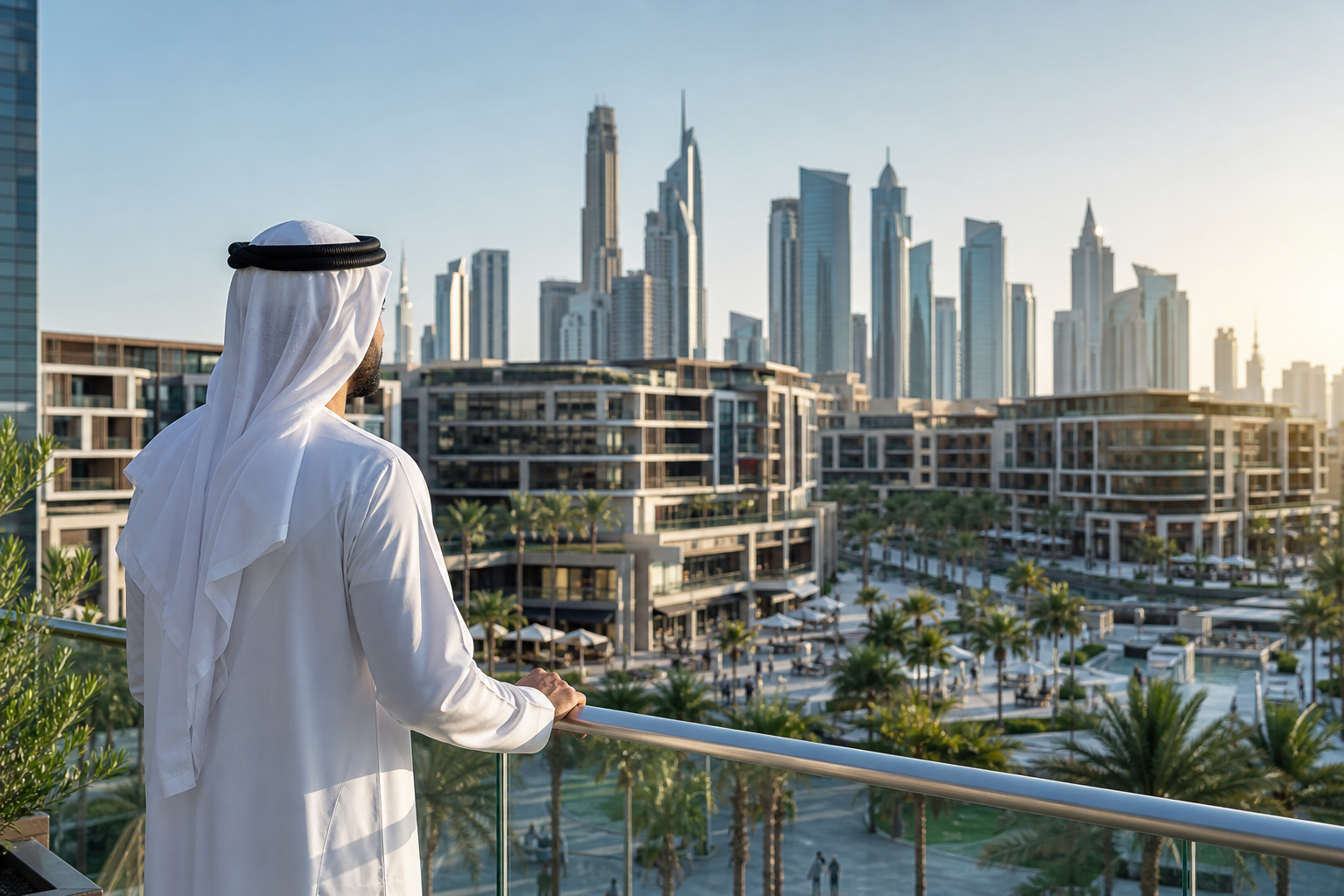

Mixed use development analysis for UAE buyers and investors
Key Takeaways
- Mixed-use developments combine residential, retail, office, hospitality, and leisure, enhancing community livability.
- Location, land-use balance, and developer credibility are critical factors in assessing mixed-use projects.
- Different emirates in the UAE showcase unique mixed-use development patterns influenced by local market dynamics.
- Investors should be aware of off-plan risks, including phasing uncertainty and developer credibility.
- Working with a local advisor can provide tailored insights and help navigate the complexities of mixed-use investments.
What mixed-use development means and why it matters
Mixed-use development describes projects that combine two or more complementary uses on the same site, for example residential, retail, office, hospitality, and leisure. The concept sits within the New Urbanism and Smart Growth traditions that prioritize walkability, diverse functions, and more efficient land use. Academic reviews show the idea delivers social and environmental benefits when design and use compatibility are carefully managed, but it also creates implementation challenges where incompatible uses generate externalities or social costs; see an integrative literature review for an overview of these trade-offs (ScienceDirect).
For buyers and investors, a focused mixed use development analysis matters because the land-use mix and delivery model directly affect demand, tenant mix, management complexity, and long-term value. A well-calibrated scheme can support higher footfall for retail, steady rental demand for apartments, and resilient capital performance. Conversely, poor use balance, weak governance, or phasing issues can depress occupier interest and increase operating friction.
Inteva Real Estate curates off-plan developments and featured properties across Dubai, Abu Dhabi, Sharjah, and Oman and positions project selection around these practical value drivers. For an initial sense of inventory and shortlisting principles, visit the Inteva Real Estate website.
Common mixed-use models and developer approaches in the UAE
In the UAE market you will commonly encounter two dominant developer approaches to mixed-use design.
- Large masterplanned schemes, typically delivered by major developers, combine residential neighborhoods with retail centers, offices, hospitality, and leisure in an integrated masterplan. These projects rely on scale to create ecosystem effects, such as destination retail and strong public-realm investment.
- Smaller design-led mixed-use projects, often developer- or investor-led, integrate a tighter mix of uses on a single block or podium and focus on higher-quality public spaces, curated retail, and design differentiation rather than sheer scale.
Market commentary on Dubai’s developer landscape highlights how different developer strategies lead the sector: some favour large masterplans with phased delivery, while others adopt a design-led, human-scale model. That variation affects phasing risk, amenity delivery, and occupant profiles; a recent market analysis outlines which developer approaches currently lead mixed-use product types in Dubai (Oliva).
Key criteria to analyse a mixed-use project
A structured mixed use development analysis converts general advantages into concrete decision criteria. Below are the principal attributes to compare when shortlisting projects.
Location and catchment
Evaluate the catchment area first. Look beyond the project gate to employment clusters, schools, hospitals, and leisure attractions that feed long-term demand. Proximity to major highways, metro stations, or a tram line matters for both residents and office occupiers. For retail-led value, consider daytime footfall from nearby offices and evening activity from residents. In short, location dictates the natural occupier mix and how resilient demand will be in different market cycles.
Land-use mix and balance
Examine the planned proportions of residential, retail, office, hospitality, and public space. A healthy mixed-use scheme balances complementary activities: residential density paired with local retail and neighborhood services can sustain convenience retail and leisure, while a large office component should be paired with adequate transit and business-supporting amenities. Academic analysis cautions that incompatible adjacencies, for example heavy industrial uses next to family housing, create externalities that reduce liveability and value; therefore weigh compatibility as much as quantity.
Connectivity and last-mile mobility
Connectivity includes two elements: external transport links and internal circulation. Good external links make the project attractive to workers and tourists, while internal circulation—clear pedestrian routes, bicycle lanes, and convenient drop-off and servicing—affects daily convenience and retail performance. For mixed-use schemes, a pedestrian-first internal design and reliable last-mile solutions will improve occupier satisfaction and long-term footfall.
Phasing, delivery and governance
Off-plan buyers need to understand the developer’s phasing plan, which parcels will be delivered first, and how shared amenities will be sequenced. Governance arrangements matter as well: who manages common areas, how homeowners associations will operate, and whether the master developer retains control of retail leases or hands them over. Undefined governance or open-ended phasing can leave early residents living in an incomplete environment for years, so verify phasing milestones and governance documents before committing.
Developer credibility and track record
Assessing developer credibility is a central part of mixed use development analysis. Concrete checks include delivery history on similar-scale projects, financial disclosures where available, transparency on subcontractors, and the developer’s record on meeting completion and quality commitments. In Dubai and the broader UAE, developer approaches vary; use market context to judge whether a developer’s model fits your risk tolerance.
Revenue drivers and investor metrics
Investment-minded buyers should convert project features into measurable revenue drivers. For rental-focused strategies, review expected tenant profiles, amenity support for longer leases, and likely rental bands for comparable assets in the catchment. For capital-growth strategies, assess planned infrastructure, masterplan commitments that will catalyze demand, and whether the scheme will remain unique in its submarket. Ask the developer for comparable leasing evidence and a rationale for projected demand rather than relying on marketing claims.
How mixed-use projects differ across Dubai, Abu Dhabi and Sharjah

Each emirate has distinct patterns that matter for a mixed use development analysis.
- Dubai tends to host large masterplans and high-profile mixed-use islands and districts delivered by major national developers, with strong private-sector retail and hospitality ecosystems. Scale often drives marketability, but phasing complexity and competition within a crowded retail market are important considerations.
- Abu Dhabi features strategic, often government-influenced mixed-use developments such as cultural districts and island projects where public infrastructure and leisure components are major demand drivers. These projects can benefit from curated public investments but may have different governance and approval processes to review.
- Sharjah typically offers more affordability and smaller-scale mixed-use developments focused on local demand. Regulatory context and municipal-level planning will affect allowed uses and operational costs, so confirm local rules and service expectations.
Inteva Real Estate’s regional portfolio spans these emirates, which can help buyers compare how masterplan scale and developer concentration shape outcomes across markets.
Off-plan specific risks and red flags
When evaluating off-plan mixed-use projects, watch for these common risks and simple verification steps to mitigate them.
- Phasing uncertainty: confirm binding milestone schedules and penalties. Ask for a clear timeline for amenity delivery and retail openings.
- Use incompatibility: review the masterplan to ensure incompatible uses are separated by buffers, landscaping, or sound mitigation.
- Shifting masterplans: check whether layout or use mixes are locked in sales contracts or if the developer retains broad amendment rights.
- Financing constraints: request evidence the developer has construction financing or presales that support delivery. A thin financial footprint can slow or stall projects.
- Incomplete approvals: verify that building and planning approvals are in place for each phase. Confirm which approvals remain pending and why.
These risks appear in academic and practitioner discussions about mixed-use implementation and are practical points to verify before committing to an off-plan purchase.
Common investor objections and decision criteria
Buyers often raise valid objections when considering mixed-use schemes. Turn each objection into a decision rule.
- Complexity and management fees: if ongoing service charges are high, require a detailed breakdown and negotiate caps where possible.
- Liquidity concerns: apply a liquidity test—compare comparable resale transactions in the micro-market and prefer areas with diversified demand sources.
- Delivery uncertainty: demand escrowed payments, transparent escrow arrangements, and contractual completion guarantees where developers provide them.
- Unclear tenant mix: ask for lease commitments or letters of intent for key retail or office anchors that drive footfall.
Short investor checklist and next steps

Use this compact checklist to shortlist mixed-use projects quickly.
- Confirm transport links and primary employment catchment within a 15 to 30 minute travel time.
- Compare the land-use percentages and verify compatibility between residential and commercial functions.
- Request phasing schedule, milestone penalties, and a covenant summary for masterplan changes.
- Check developer delivery history on similar mixed-use projects and request financial transparency where possible.
- Review likely occupier mix and any anchor tenant commitments for retail or office space.
- Obtain a clear service-charge forecast and governance documents for common-area management.
For a related shortlisting tool that helps convert these criteria into a ranked checklist, consult Inteva’s apartments for sale UAE: a buyer’s shortlisting checklist when evaluating residential components within mixed-use offers.
Work with a local advisor: what to expect
A local advisor experienced in mixed-use schemes will provide a focused analysis that includes project comparison, developer due diligence, and tailored scenario modelling for revenue and occupancy. Typical advisory tasks include validating approvals, reviewing phasing and governance terms, and preparing a short property shortlist that aligns with your investor profile. Inteva Real Estate offers market access across Dubai, Abu Dhabi, Sharjah, and Oman and can prepare a project comparison or bespoke briefing to support your decision. Contact Inteva Real Estate through the official site for a consultation.
Frequently asked questions
What is mixed use development and how is it defined in practice?
Mixed-use development is any project that intentionally blends multiple land uses—such as housing, retail, offices, hospitality, and public space—within a single development or masterplan. In practice the definition emphasizes functional complementarity, pedestrian connectivity, and a design that supports multiple daily activities without long commutes. Academic reviews frame these goals alongside the risk that incompatible uses create undesirable externalities.
How do I check a developer’s credibility for a mixed-use project in the UAE?
Concrete checks include delivery history on comparable projects, proof of construction financing or escrowed funds, transparent phasing schedules with penalties, and references from completed buyers. Where possible, request audited financial statements or evidence of institutional backing. Comparing developer approaches across projects in Dubai and other emirates helps reveal whether a developer’s model and scale match your risk tolerance.
What approvals and documents should I verify before buying off-plan in a mixed-use scheme?
Verify masterplan approvals, individual building permits for your unit, environmental or traffic impact assessments if applicable, and any homeowners association or master-developer governance documents. Confirm which approvals remain outstanding and obtain a timeline for their completion.
Are mixed-use developments better for rental yield or capital growth in the UAE?
There is no universal answer. Mixed-use schemes that secure strong occupier mixes, anchor tenants, and good connectivity can produce stable rental income and capital appreciation. However, outcomes depend on catchment demand, the strength of retail or office anchors, and the developer’s delivery quality. Use a mixed use development analysis to map the project features to your investment horizon and income requirements.
What are the top red flags to watch for when comparing off-plan mixed-use projects?
Top red flags include vague phasing plans, broad developer rights to change the masterplan, missing construction finance, pending critical approvals, and an unclear governance framework for common areas. Each of these can be validated through documentation requests and third-party checks.
If you want an expert comparison of shortlisted projects or a tailored mixed use development analysis for a specific site, contact Inteva Real Estate for a consultation: the official website.

Join The Discussion