
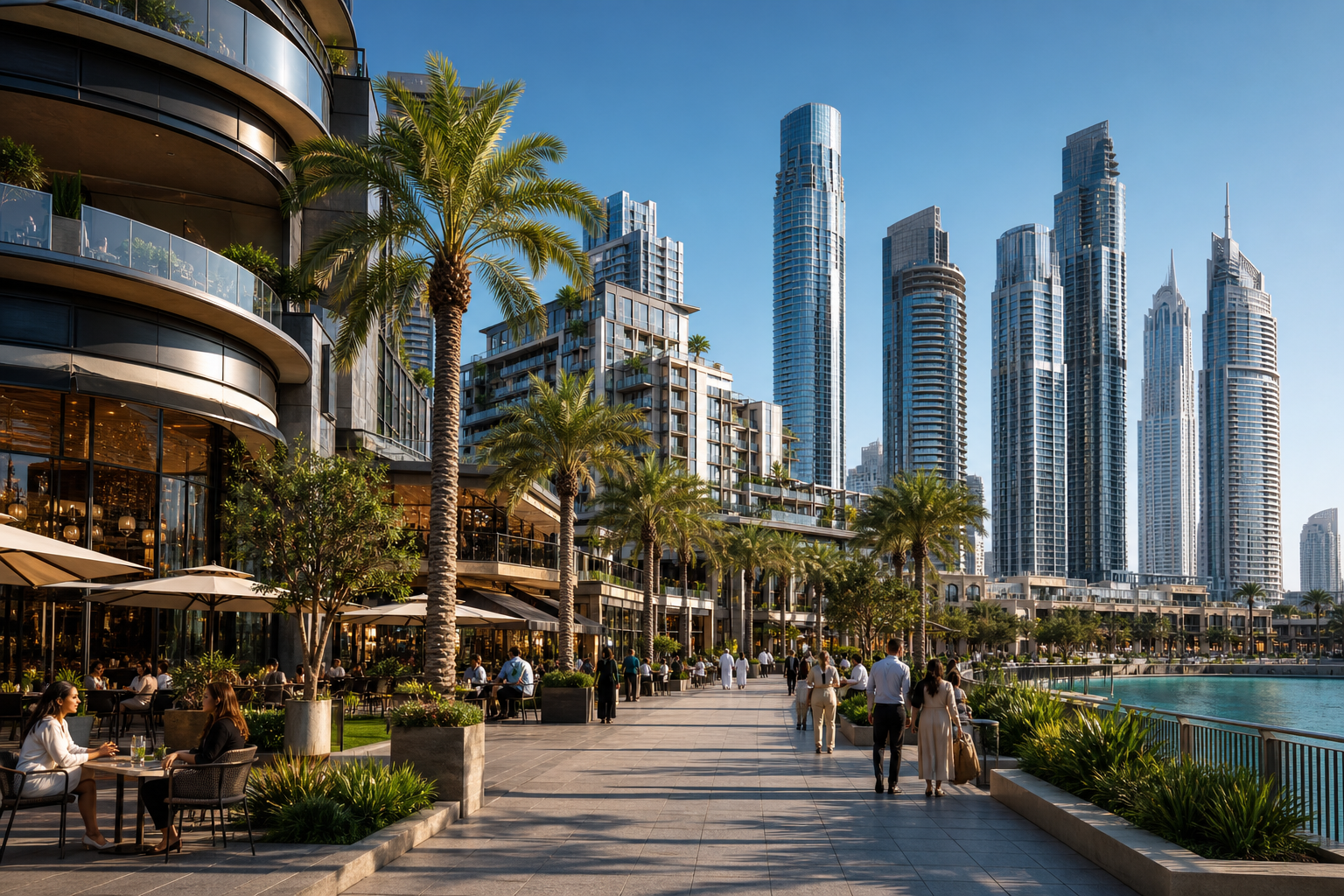
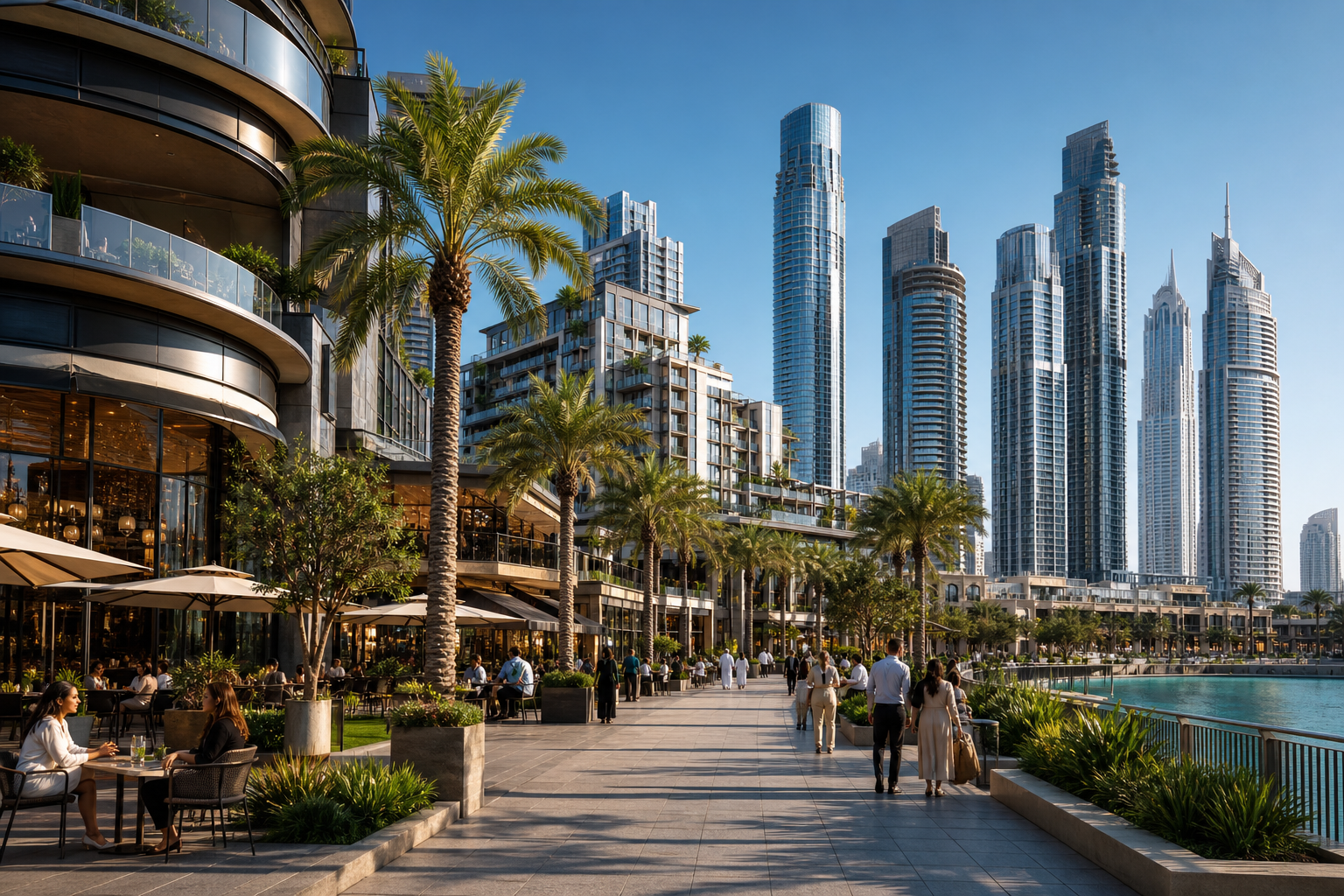
Mixed-use development trends in the UAE: what investors should compare
This article reviews seven mixed-use development trends that are shaping master-planned communities across Dubai, Abu Dhabi, Sharjah and Oman. It is written for buyers, investors and advisors who need focused comparisons, local examples, and practical due diligence prompts. The list is comparative, not a ranking of projects, and does not constitute investment advice. Inteva Real Estate curates off-plan projects across the region and can provide brochures and shortlists on request via +971 5037 58900 or the website.
Selection criteria and how to use this comparison
To pick these trends we applied five filters: market relevance, demonstrable developer response, measurable investor impact, availability of local examples, and independent reporting. Sources used include market commentary, developer announcements and placemaking research. For evidence of rising demand for commercially zoned land and mixed-use parcels see JLL on Dubai land dynamics and for major master community partnerships see the Dubai South announcement with Majid Al Futtaim.
Use each trend item as a scoring line when you shortlist projects. For each project ask the brief due diligence prompts provided, then allocate points to see which development best matches your return horizon and risk appetite.
Seven mixed-use trends investors should compare
1) Live-work-play integration and tenancy mix
Definition: Projects are designed so residents can live, work and recreate within walking distance, using a calibrated mix of residential, office, retail and leisure uses.
Why it matters: A balanced tenancy mix reduces vacancy risk, supports steady footfall for retail and improves rental appeal for residents. For investors, a well executed mix can stabilise income during market cycles.
How developers respond: Developers model tenant mixes based on projected catchment and secure retail and F&B operators early to seed activity.
UAE example: Several Dubai master communities and island projects are marketed with integrated retail and leisure to drive on-site demand, as visible across broker listings and project brochures.
Due diligence prompts: What is the planned commercial to residential ratio, which anchor tenants are committed, and is there a staged leasing plan that matches residential handovers?
2) Experience-focused placemaking and programming
Definition: Projects prioritise curated events, seasonal activations, public realm design and third-place venues to keep districts vibrant.
Why it matters: Experience-led places keep occupancy and visit frequency high, which supports retail rents and long-term desirability for residents. Designers and operators now treat programming as an asset management task rather than a developer luxury, following trends documented by placemaking specialists.
How developers respond: They integrate event spaces, food and beverage clusters, and lifestyle partners into masterplans, and allocate operating budgets for programming.
UAE example: Large new master communities announce partnerships with leisure and retail operators to anchor public realm activation.
Due diligence prompts: Is there a dedicated placemaking or events budget, who manages programming after handover, and are activation KPIs built into service agreements?
3) Transit-oriented development and last-mile connectivity
Definition: Projects are sited to leverage public transport nodes and feed last-mile services such as shuttles, bike share and pedestrian corridors.
Why it matters: Proximity to transit improves occupancy, reduces car dependence, and enhances long-term value. JLL highlights stronger commercial land demand where transport and zoning align, which supports mixed-use growth.
How developers respond: They design masterplans with transit nodes, integrated parking strategies and partnerships for last-mile operators.
UAE example: New master plans around Dubai South and other growth nodes emphasise connectivity to support large scale mixed-use schemes, as shown in recent public announcements.
Due diligence prompts: How many minutes is the nearest public transport node on foot, what last-mile solutions are proposed, and does the traffic impact assessment support high-density activation?
4) Flexible asset models and hybrid revenue streams
Definition: Owners and operators design for flexible uses where offices can convert to co-working, retail zones can host pop-ups, and short-term rentals are facilitated within regulatory limits.
Why it matters: Flexibility reduces obsolescence risk and creates multiple income channels. Hybrid revenue models can offset residential seasonality with hospitality and commercial earnings.
How developers respond: They specify adaptable floor plates, modular services and mixed tenure offerings that let operators pivot to demand.
UAE example: Developers increasingly include co-working floors and flexible retail podiums in new blocks to respond to changing tenant needs.
Due diligence prompts: Are floor plates designed for conversion, what clauses govern use changes, and how are service charges apportioned across flexible uses?
5) Sustainability and wellbeing credentials
Definition: Projects now target energy, water and wellness measures, green certifications and climate-resilient infrastructure as part of market differentiation.
Why it matters: Sustainability can lower operating costs, appeal to premium tenants, and satisfy regulator and lender requirements. Design for wellbeing also supports higher rental yields in certain segments.
How developers respond: They pursue green building ratings, include active transport infrastructure, and specify healthy indoor environments.
UAE example: Several new urban districts emphasise sustainable infrastructure and wellness amenities to align with wider emirate-level sustainability goals.
Due diligence prompts: What certification targets exist, what are projected energy and water savings, and are sustainability measures tied to service charge forecasts?
6) Master-planned scale and institutional partnerships
Definition: Large scale master communities combine residential, logistics, retail and civic uses and attract institutional or strategic partners to underwrite infrastructure and anchor amenities.
Why it matters: Scale can deliver operating efficiencies, stronger marketing pull and institutional-quality governance. Recent partnerships between large landowners and major retail operators show appetite for very large mixed-use developments.
How developers respond: They enter strategic alliances with operating partners and phase delivery to de-risk early stages for investors. The announced partnership to develop a major mixed-use community in Dubai South illustrates how scale and partners shape delivery.
Due diligence prompts: Who are the project partners, what are their financial commitments, and how is governance structured for shared infrastructure?
7) Data-driven asset management and smart infrastructure
Definition: Projects deploy sensors and management platforms to optimise energy use, crowd flow, parking and tenant engagement, which supports active asset management.
Why it matters: Data reduces operating cost uncertainty and provides real-time indicators of tenant health. In mixed-use schemes this improves landlord decision making across asset classes.
How developers respond: They install smart building systems at launch and include digital platforms for residents and operators.
Due diligence prompts: What telemetry will be available to owners, who owns the data after handover, and are there measurable OPEX savings projected from smart systems?
Regional comparison: Dubai, Abu Dhabi, Sharjah and Oman
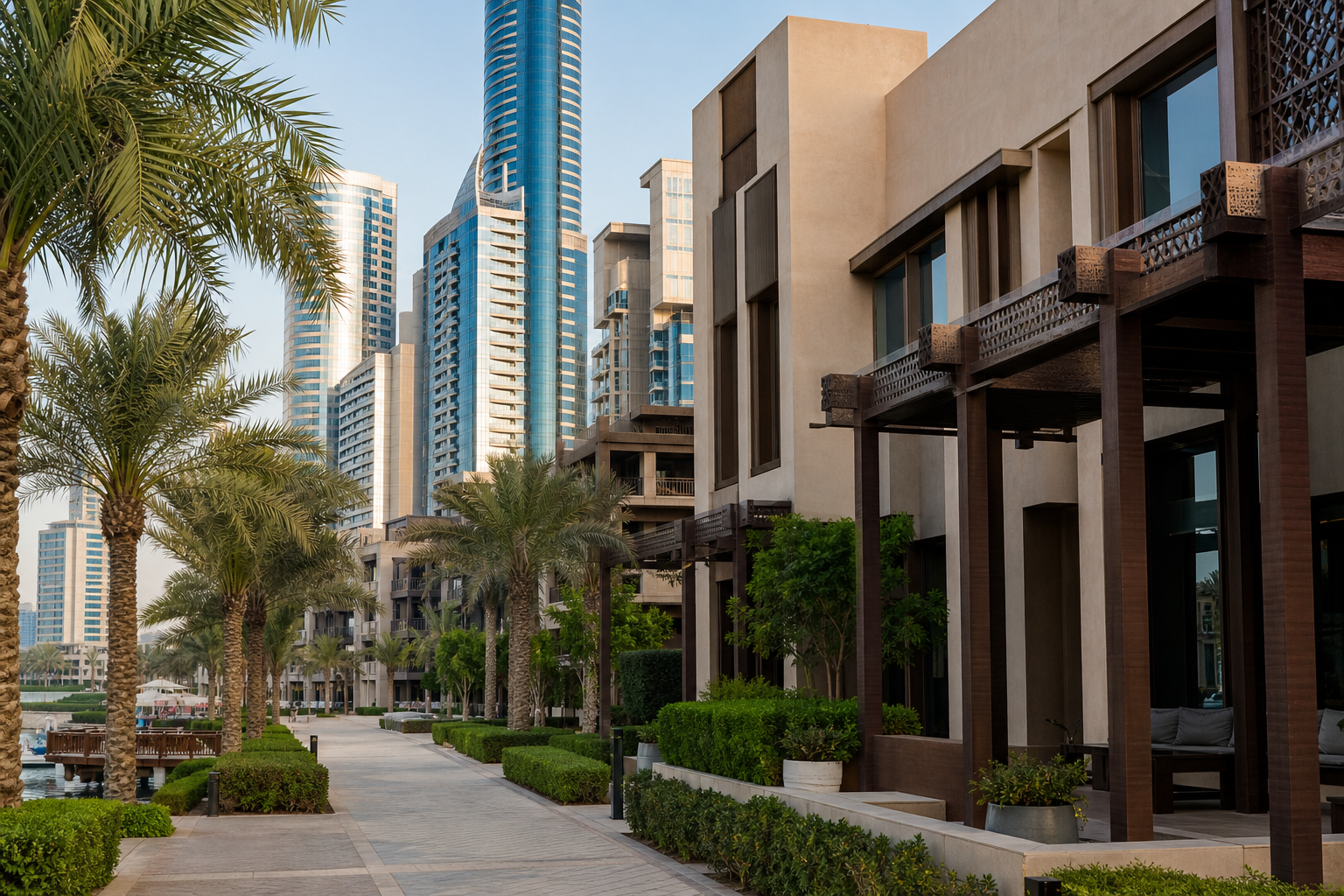
Dubai: Dominant types are large master communities and branded mixed-use towers with retail podiums. Opportunities include scale, strong tourism and global investor demand, while risks include cyclical oversupply in certain microzones. For large masterplans and institutional partnerships see the Dubai South development announcement.
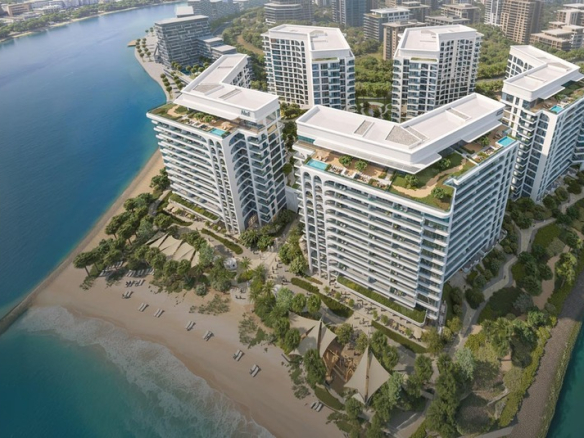
Abu Dhabi: The emirate focuses on waterfront and cultural mixed-use precincts with institutional backing and steady demand from government and corporate tenants. Projects on new islands and waterfronts emphasise placemaking and quality tenants. Inteva lists Abu Dhabi island and Al Reem projects among its featured portfolios.
Sharjah: Growth is led by affordability and family centric communities where mixed-use helps provide neighbourhood retail and schools. The opportunity is capture of price sensitive renters and homeowners, while the challenge is transitioning supply into higher-service mixed-use models.
Oman: The market is more nascent for large mixed-use masterplans, with tourism-focused coastal developments and phased resort towns. Opportunities exist for resort residential and hospitality hybrid models, with risks linked to demand forecasting and infrastructure phasing.
For buyers who want project shortlists focused on apartments, see apartments for sale UAE: a buyer’s shortlisting checklist for tactical shortlisting and scoring.
How to compare mixed-use projects: decision checklist and scoring criteria
Use this weighted checklist to compare options quickly. Assign scores 1 to 10 and multiply by the weight.
- Location and connectivity — weight 20
- Developer track record and partners — weight 18
- Tenancy mix and commercial strategy — weight 15
- Transport and last-mile connectivity — weight 12
- Operating model and service charge clarity — weight 10
- Flexibility and asset convertibility — weight 10
- Sustainability and wellbeing features — weight 8
- Exit and liquidity prospects — weight 7
Worked example: Project A has excellent location (9), strong developer partners (8), average commercial take-up risk (6) and good connectivity (8). Project B has good location (8), leading retail anchors (9), but weaker governance on service charges (5). Applying weights quickly reveals which project better matches a yield or capital growth objective.
Common objections, developer red flags and what to ask

Key investor objections include potential over-supply and rising vacancy, unclear or escalating service charges, complex mixed ownership structures that slow decision making, and long phasing that delays revenue. JLL’s market review notes the importance of appropriately zoned land and careful delivery to avoid pockets of inactivity.
Developer red flags to watch for: vague tenancy plans, no committed anchor tenants, missing approvals for key infrastructure, and no clear post-handover management plan. Ask for proof: masterplan approvals, signed anchor letters, an operating budget that shows service charge assumptions, and a rent roll or leasing phasing schedule.
Next steps and how to get project brochures or a personalised comparison
If you would like a one-page comparison of up to three mixed-use projects or a short advisory call, contact Inteva Real Estate by phone or WhatsApp at +971 5037 58900. Inteva curates off-plan projects across Dubai, Abu Dhabi, Sharjah and Oman and can deliver brochures and a tailored shortlist. Always run legal and tax checks with qualified advisers before committing to any transaction.
Frequently asked questions
What is a mixed-use development and why does it matter for UAE investors?
A mixed-use development combines residential, commercial, retail and leisure uses on one site to create synergies in footfall, service provision and revenue streams. For UAE investors, mixed-use projects can diversify income, support higher occupancy and capture both tourist and resident demand.
How do mixed-use development trends affect rental demand and capital appreciation?
Trends that improve connectivity, placemaking and tenant mix tend to support rental demand by increasing a location’s desirability. Sustainability and smart infrastructure can also lower operating costs and attract premium tenants. However, local supply dynamics and micro-location factors ultimately determine capital performance.
Which emirate is currently most favourable for mixed-use investment, Dubai or Abu Dhabi?
Both emirates offer strengths. Dubai provides scale, tourism and a high volume of new master communities, while Abu Dhabi focuses on waterfront precincts, institutional partners and steady corporate demand. Your preference should depend on desired risk profile, liquidity horizon and asset class mix.
What questions should I ask a developer when evaluating a mixed-use project?
Ask for the tenancy mix and anchor commitments, masterplan and infrastructure approvals, post-handover management arrangements, projected service charges, and any partner agreements for retail and leisure operations.
Can foreign buyers purchase units in UAE mixed-use projects and what legal checks should they do?
Foreign buyers can purchase in many designated freehold zones across the UAE. Before transacting, verify title and ownership, review the sales contract and escrow arrangements, confirm handover and completion warranties, and obtain tax and residency advice from qualified professionals.
Selected sources: JLL, Gensler, Betterhomes, Dubai Media Office and Inteva Real Estate.

Join The Discussion