

What Should You Ask Before Accepting a UAE Property Valuation?
A useful UAE property valuation should do more than attach a number to a home, apartment, villa, commercial unit, or development. It should explain the purpose of the assessment, the evidence used, the property details considered, the valuation date, and the assumptions that may affect the result. An asking-price opinion or automated estimate may be a useful starting point, but it should not automatically be treated as a formal valuation or guaranteed sale price.
Before relying on a figure for a purchase, sale, rental decision, investment comparison, or financing discussion, test how it was produced. The six questions below help you identify missing evidence and decide whether you need clarification, a broader market comparison, or an appropriate formal professional valuation.
1. What decision is this valuation supposed to support?
Start by identifying the decision, not the price you hope to see. A valuation prepared to help set a sales strategy may not answer the same question as an assessment used to compare investments, review a rental opportunity, discuss financing, or evaluate a potential purchase.
Ask the person preparing the assessment to confirm:
- Which property, unit, plot, or development is being assessed.
- Whether the figure is a market estimate, pricing opinion, or formal professional valuation.
- The valuation or assessment date.
- Whether the figure supports a sale, purchase, rental, investment review, financing discussion, or another purpose.
- Which decisions the assessment is not designed to support.
This distinction matters because the same property can be viewed differently by an owner setting an asking price, a buyer testing affordability, and an investor comparing expected income or long-term value. A clear purpose also makes it easier to identify missing evidence.
2. Are the comparable properties genuinely comparable?

Comparable properties are the foundation of many market-based assessments, but proximity alone does not make two properties equivalent. A nearby listing may differ substantially in size, layout, floor, outlook, condition, parking, building quality, completion status, or transaction context.
Review each comparable and ask:
- Is it the same broad property type, such as an apartment, villa, office, retail unit, or mixed-use asset?
- Is it in the same community or a location with genuinely similar access and surrounding characteristics?
- Does its area, layout, floor position, view, parking, and finish resemble the subject property?
- Is it ready, under construction, or at another development stage?
- Is the figure based on an advertised asking price or evidence of a completed transaction?
- Were differences between the properties explained through transparent adjustments?
Do not accept a neat average without understanding what was included in it. For a broader framework, see the project comparison criteria for UAE buyers.
3. Did the assessment use complete property information?
An assessment can become less useful when important details are missing or assumed. Before requesting a UAE property valuation, provide the most accurate information available and ask which items were actually used.
Relevant details may include:
- Building, community, unit, plot, or property identification.
- Internal and external areas, where applicable.
- Layout, bedroom or office configuration, floor, orientation, and view.
- Parking, storage, balcony, terrace, garden, or other associated areas.
- Fit-out, renovations, maintenance condition, and photographs or inspection notes.
- Occupancy, tenancy, or vacancy information for a rental or income-producing property.
- Available plans, specifications, brochures, and project documentation.
- Completion or construction status for an off-plan property.
Not every item applies to every property. The important question is whether information that could materially change the assessment was available, verified where possible, and reflected in the reasoning.
4. How current is the evidence?
Property information has a time dimension. Ask when comparable data, listing details, project information, photographs, and condition observations were collected. Also ask whether the assessment date is clear and whether the figure should be reviewed if material circumstances have changed.
Older information may be less useful when the subject property has been renovated, a tenancy has changed, a project has progressed, available inventory has shifted, or the surrounding area has developed. This does not mean an older assessment is automatically wrong. It means its date and limitations should be visible.
The issue is especially important when comparing off plan projects UAE buyers may consider across different emirates. Development status, current specifications, and developer-supplied information should be kept separate from assumptions about the finished property. Inteva’s off-plan projects UAE guide provides additional context.
5. Were condition, location, and development factors considered?
A valuation should not reduce a property to its area and location label. Qualitative factors may affect whether a comparison is genuinely useful, even when they are difficult to express as a single adjustment.
For ready property, ask whether the assessment considered maintenance, fit-out quality, renovations, defects, vacancy, and the practical characteristics of the building or community. For apartments, this may include the unit’s position and outlook. For villas, it may include plot characteristics, layout, privacy, and the relationship between the home and its surrounding community.
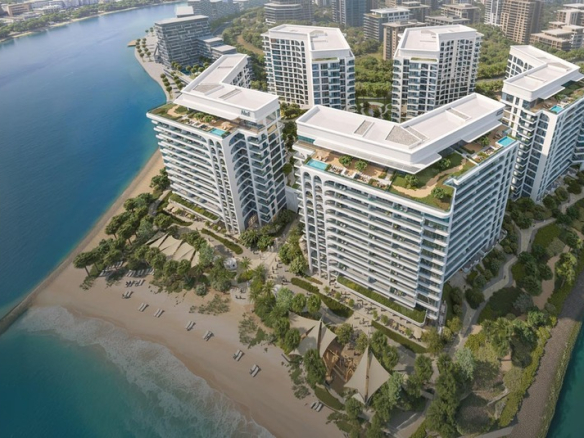
For off-plan property, ask how the assessment treated the fact that the asset is not yet complete. Review available plans, specifications, developer information, construction stage, and differences between the proposed concept and the evidence currently available. Inteva’s portfolio includes Verdes by Haven in Dubailand and Nawayef Heights on Hudayriyat Island in Abu Dhabi, illustrating why project identity and development context matter.
For Abu Dhabi communities, review these questions for evaluating Abu Dhabi off-plan communities. The purpose is to separate what is known from what still needs verification.
6. Are the assumptions and limitations clearly explained?
Transparency is often more informative than the number itself. Ask for a clear explanation of data sources, comparable selection, adjustment logic, valuation date, exclusions, and limitations.
A credible explanation should answer:
- Why were these properties selected?
- How were differences in size, condition, location, status, or specification treated?
- Which details came from the owner, developer, landlord, or another source?
- What information could not be independently confirmed?
- Does the conclusion represent a market opinion or a formal professional valuation?
- What circumstances would require an update?
Be cautious when adjustments are unexplained, limitations are omitted, or the language implies certainty about a sale price, investment return, financing decision, or future appreciation. Inteva Real Estate describes its approach as data-driven and personalized, but this should be understood as advisory context rather than evidence of independent valuation accreditation. Its company information explains its stated approach.
How should the checks change by property type?
| Property type | Primary evidence | Common blind spot | Question to ask next |
|---|---|---|---|
| Off-plan | Project identity, plans, specifications, developer information, and development status | Treating proposed features as confirmed facts | Which parts depend on assumptions? |
| Ready residential | Unit or villa details, condition, fit-out, comparables, and location | Ignoring view, floor, layout, renovation, or maintenance | Which physical differences were reflected? |
| Rental | Occupancy, tenancy information, condition, and rental comparables | Confusing advertised rent with dependable income | What is known about the tenancy? |
| Commercial | Use, size, condition, occupancy, location, and relevant comparables | Using residential comparisons | Are the comparables from the same commercial context? |
| Mixed-use | Each component’s use, condition, occupancy, and access | Applying one figure to different uses | How were components assessed separately? |
Inteva presents opportunities across Dubai, Abu Dhabi, Sharjah, and Oman. Readers can explore its listed projects, while still testing each listing against property-specific evidence.
What should you prepare before requesting an assessment?
- Property address, community, unit or plot reference, and type.
- Available ownership, unit, or identification information.
- Floor plans, specifications, brochures, and project documents.
- Area, layout, floor, orientation, view, parking, storage, and outdoor details.
- Recent photographs, inspection notes, renovation records, and condition concerns.
- Tenancy, occupancy, vacancy, or lease information where relevant.
- Construction or completion information for off-plan property.
- The decision you are trying to make and the relevant date.
- Questions about evidence, assumptions, exclusions, and updates.
Label information as confirmed, owner-provided, developer-provided, or still to be verified. This helps prevent an estimate from appearing more precise than its underlying information.
When should you pause, verify, or seek further support?
Proceed with cautious comparison
You may use the assessment as one decision input when its purpose, evidence, date, property details, and assumptions are clear. Continue to distinguish a market estimate from a confirmed transaction outcome.
Pause and request clarification
Ask for more information when comparisons are unexplained, important features are omitted, the date is missing, project details are stale, or confidence is expressed without limitations.
Seek an appropriate formal professional valuation
When a decision requires a formal opinion or independent documentation, ask the relevant institution or adviser what type of valuation and professional qualifications are appropriate. A brokerage estimate or investor comparison should not substitute for a formal valuation when one is specifically required. For broader purchase context, read the steps for buying property in the UAE.
Frequently asked questions
Is a UAE property valuation the same as the asking price?
No. An asking price is the seller’s or agent’s stated price. A valuation or market assessment should explain its evidence and assumptions, and neither automatically guarantees the eventual transaction price.
When might an owner need a formal valuation instead of a market estimate?
A formal valuation may be appropriate when an institution, legal process, or other decision specifically requires independent professional documentation. Confirm the required format and qualifications with the relevant institution or adviser.
A Better UAE Property Valuation Starts With Better Questions
The most useful UAE property valuation is not necessarily the one with the most precise-looking figure. It is the one that matches the decision, uses genuinely comparable evidence, reflects complete and current information, considers condition and location, and explains its assumptions and limitations.
Before you buy, sell, rent, invest, or discuss financing, document the six answers. If important evidence is missing, pause rather than filling the gap with optimism. If the decision requires formal independent documentation, seek the appropriate professional valuation.
Inteva Real Estate supports property search, project exploration, and buyer inquiries across Dubai, Abu Dhabi, Sharjah, and Oman. Contact Inteva Real Estate to discuss your property requirements.
,”headline”:”What Should You Ask Before Accepting a UAE Property Valuation?”,”description”:”Learn how to test a UAE property valuation with six questions on purpose, evidence, property details, timing, condition, and assumptions before deciding.”,”image”:[“https://uplift-ai-images.b-cdn.net/blog-pipeline-v2/ade25ba5-8542-430e-a44d-2e3d182faa13/ab4200f7-8d3e-4880-94f5-22055b1fddc4.png”,”https://uplift-ai-images.b-cdn.net/blog-pipeline-v2/ade25ba5-8542-430e-a44d-2e3d182faa13/a8b7b72d-1eb6-4a0a-9117-57604c332c66.png”,”https://uplift-ai-images.b-cdn.net/blog-pipeline-v2/ade25ba5-8542-430e-a44d-2e3d182faa13/9ef0b409-fbcd-4947-a484-887520a6c375.png”],”datePublished”:”2026-09-02″,”dateModified”:”2026-09-02T03:05:48.300Z”,”inLanguage”:”en-US”,”keywords”:”uae property valuation, uae, property, valuation”,”articleSection”:”Off Plan Projects”,”author”:,{“@type”:”ListItem”,”position”:2,”name”:”Blog”,”item”:”https://intevarealestate.com/blog”},{“@type”:”ListItem”,”position”:3,”name”:”What Should You Ask Before Accepting a UAE Property Valuation?”,”item”:”https://intevarealestate.com/blog/questions-before-accepting-uae-property-valuation”}]}


Join The Discussion